
Storm recovery
What to Do With Your Pool After a Monsoon Storm
Dust, debris and rain hit an Arizona pool hard. What to do in the first 48 hours after a monsoon storm — and when it needs more than a net.
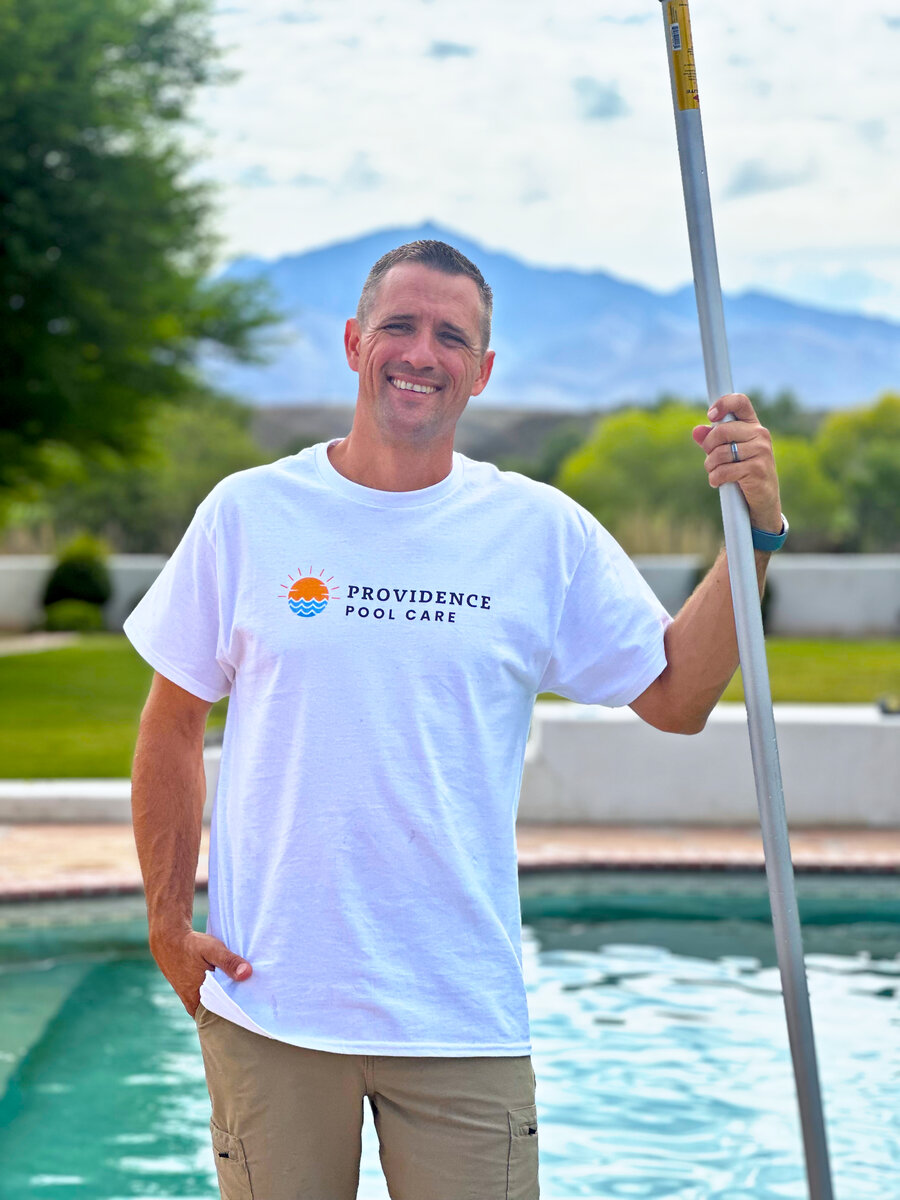
Arizona's monsoon season ramps up in mid-June and doesn't fully decay until late September, and a single storm can undo two weeks of good pool care in about forty minutes. The wind arrives first and puts half your yard in the water. Then the rain dilutes everything you've carefully balanced. By morning the pool looks tired, and if it's a bad one, the pump is making a noise it didn't make yesterday.
Most of what needs doing is straightforward, and doing it quickly matters more than doing it perfectly. Here's the order we work in.
What does a monsoon actually do to a pool?
Four things happen at once, which is why storm recovery is more than just fishing leaves out.
- Organic debris lands in the water. Leaves, palm fronds, seed pods, blown-in landscape mulch. While that material sits in the pool it decomposes, and decomposing organics consume chlorine. That's the part people underestimate — the debris isn't just ugly, it's actively eating your sanitizer.
- Dust and silt load the water. A haboob puts a remarkable amount of fine dust into a pool. It doesn't all settle. Much of it stays suspended, which is why the water goes flat and grey rather than dirty-looking, and it heads straight for your filter.
- Rain changes the chemistry. Rainwater is soft and slightly acidic, and it arrives in volume. It dilutes your chlorine and your stabilizer, and it can move pH and alkalinity enough to matter. A pool that was balanced on Friday is not balanced after two inches of rain on Saturday.
- Runoff brings in what's on your yard. Whatever is on the deck, in the planters, or on the slope above the pool ends up in it. Fertilizer runoff is the one worth knowing about, because it carries phosphates, and phosphates are algae food.
Individually, any one of these is manageable. Together, in 105-degree weather, they're the setup for a green pool by midweek.
What should I do in the first 24–48 hours?
Start with the equipment, not the water. Before anything else, look at the equipment pad. If there's been flooding, standing water, or a power interruption, don't start flipping switches. A pump motor that has been submerged should not be energised until someone who knows what they're looking at has checked it — that's a safety issue and an expensive-repair issue at the same time. If anything looks wrong, leave it off and call somebody.
Get the big debris out before it sinks. This is the highest-value twenty minutes you'll spend. Floating debris is easy; sunken, waterlogged debris is a much bigger job, and it stains. Use a leaf rake rather than a flat skimmer net if you have one — it holds far more per pass.
Empty the baskets. All of them: the skimmer baskets and any pump baskets. After a storm they'll be packed, and a packed basket starves the pump. If your pump has lost prime, that's usually the first place to look.
Check the water level. Storms can leave a pool over-full, which stops the skimmer working properly because the surface debris no longer gets pulled in.
Then run the filter. Longer than usual. The water needs to physically pass through the filter many times over to clear suspended dust, and that's hours, not minutes.
Add an enzyme. Enzymes help break down organic materials that got into the water. Adding an enzyme will reduce the amount of chemicals needed to keep the water clear.
When do I need to test and rebalance?
Once the visible debris is out and the water is circulating, test it. After a storm the numbers that move most are chlorine and pH, and chlorine is the urgent one — you've just added a large organic load to a pool in summer heat.
The goal in the first day or two is simply to get sanitizer back to where it should be and hold it there. If chlorine keeps disappearing faster than it should, that's the pool telling you the organic load is still winning, and it usually means there's more debris on the bottom than you thought, or the filter needs attention.
In practice, chlorine demand after a storm can double. We run equipment continuously — 24 hours a day — until the water is clear, and on a storm pool that usually takes two to three days.
Why does the filter matter so much after a storm?
Because all that suspended dust has to go somewhere, and the somewhere is your filter.
A filter that was fine last week can be significantly loaded after one storm. When it loads up, flow drops, circulation drops, and the pool stops turning over properly — which is exactly the condition algae has been waiting for. A pool can be chemically fine and still go green because water isn't moving through the filter.
If pressure has climbed noticeably since before the storm, the filter needs cleaning. Cartridges need to come out and be properly cleaned rather than rinsed; a DE filter needs backwashing and recharging. We cover what's involved on our weekly maintenance page — filter condition is the part of pool care nobody sees and everybody feels.
How do I know if it's turning green?
Watch it for the next two to three days. Storm damage doesn't always show up immediately, and the sequence is fairly predictable:
- Cloudy but blue — usually suspended dust. Filter time and patience.
- Dull, flat, slightly grey-green — chlorine is losing. Act now, while it's cheap.
- Visibly green, walls feel slick — algae has established. This is no longer a chemistry adjustment, it's a recovery.
That's the short version. The full stage-by-stage breakdown is in why Arizona pools turn green.
The slick feeling on the walls and steps is the tell most people miss. You can often feel algae before you can clearly see it, and the gap between those two moments is the cheapest time to intervene.
If it's got away from you, that's what a green-to-clean recovery is for, and it's one of the things we do most in monsoon season. Getting to it early genuinely costs less than waiting — a pool that's been green for a week is a different job than one that's been green since yesterday.
What should I stop worrying about?
A few things people over-worry about after a storm:
A little dirt on the bottom. It'll vacuum out. It's not urgent as long as the water is circulating and sanitized.
One cloudy day. Suspended dust takes time to filter out. If chlorine is holding and the filter is clean, cloudy usually resolves on its own.
Topping off after rain. If rain over-filled the pool, the level will come back down on its own in this climate faster than you'd expect.
The things that are worth worrying about are the equipment ones — a pump that won't prime, a motor that got wet, a filter pressure reading that's climbed and stayed up, or a system that trips a breaker. Those don't fix themselves, and they get more expensive the longer they run wrong. If that's where you are, our repairs and equipment page covers what we diagnose and fix.
Is it worth just having someone handle it?
Honestly, for a lot of people in monsoon season, yes — not because the work is difficult, but because it's time-sensitive and it lands at inconvenient moments. Storms don't schedule themselves around your week, and the difference between a pool that's cleaned up on Monday and one that's cleaned up the following Saturday is often the difference between a skim and a recovery.
If your pool is on weekly service, this is already handled: the storm gets cleaned up on the next visit, the chemistry gets corrected, and somebody is watching the filter pressure so it doesn't quietly strangle your circulation. That's most of what weekly service actually buys you in Arizona — not the skimming, the not falling behind.
The short version
- Check the equipment pad first, and don't energise anything that got wet.
- Get floating debris out before it sinks.
- Empty all baskets.
- Run the filter longer than usual.
- Test, and get chlorine back up.
- Watch the walls for three days — slick means act now.
- Clean the filter if pressure has climbed.
If your pool took a beating and you'd rather not spend your Saturday on it — anywhere in Gilbert or the wider East Valley — tell us about it and we'll take a look.
Drafted with editorial support, then edited, corrected, and signed off by Josiah Linaman from his own experience on East Valley pools. Anything specific to a real job — the numbers, the photos, the opinions — is his.