
Water chemistry
Hard Water and Your Pool: The Calcium Problem Every Valley Pool Has
East Valley fill water is hard, and every top-up adds more calcium. Here's what scale damages — tile, heaters, salt cells — and how to stop it.
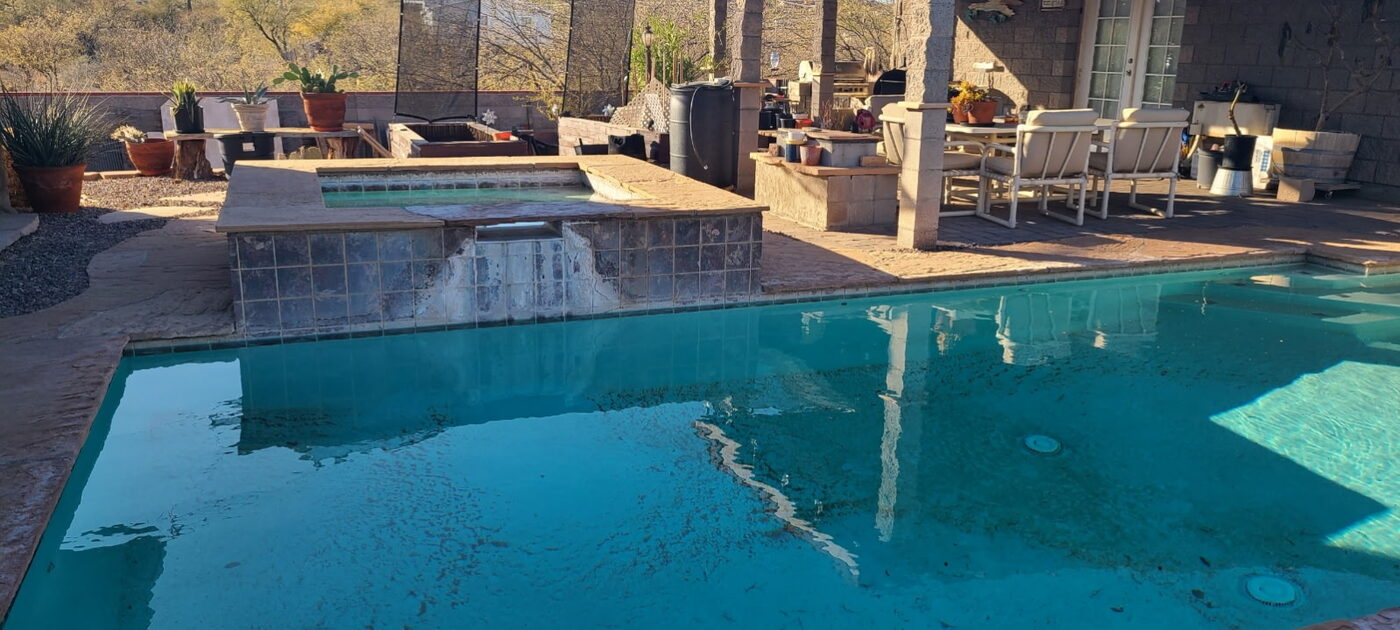
There's a white crust on the tile at the waterline. It doesn't come off with a brush, and it's slightly rough under your thumb.
That's calcium, and in the East Valley it isn't a sign you've done anything wrong. It's a sign your pool has been here a while. Our fill water is hard, our evaporation rate is extreme, and those two facts combine into the one chemistry problem that essentially every Valley pool eventually has to deal with.
Worth understanding, because the cheap version of this problem is cosmetic and the expensive version is a dead heater.
Why do Valley pools get calcium problems?
The water arrives hard. Municipal water across the East Valley carries a substantial mineral load, calcium among it. Every time you fill or top up, you're adding more.
Evaporation concentrates it. This is the part that catches people off guard. When water evaporates, only the water leaves — the calcium stays behind. Then you top the pool back up with more hard water, which adds more calcium on top of what's already there. Repeat that through an Arizona summer and calcium hardness climbs steadily.
Nothing about that is unusual or anyone's fault. It's just what happens when you run a pool in a hot, dry place with hard water. But it does mean calcium hardness is a number that only goes one direction on its own, and it's the one most pool owners never look at.
Heat and pH push it out of solution. Calcium stays dissolved within a certain range of conditions. Raise the pH, or heat the water, and it starts coming out of the water and depositing on whatever it touches. That's scale.
What does calcium scale actually damage?
In rough order of how much it costs you:
Tile at the waterline. The visible one. A white or grey crust that a brush won't shift. It's cosmetic, but once it's been there a season it doesn't come off with chemicals or elbow grease — it needs specialist cleaning, and that's a real bill. That one we refer out — at the moment tile scale removal isn't work we take on ourselves, so we'll point you to someone who does it.
Your heater. This is the expensive one, and it's invisible. Scale builds inside the heat exchanger, where it acts as insulation between the flame and the water. The heater works harder for less result, runs longer, and eventually fails. A heater killed by scale is usually a replacement, not a repair.
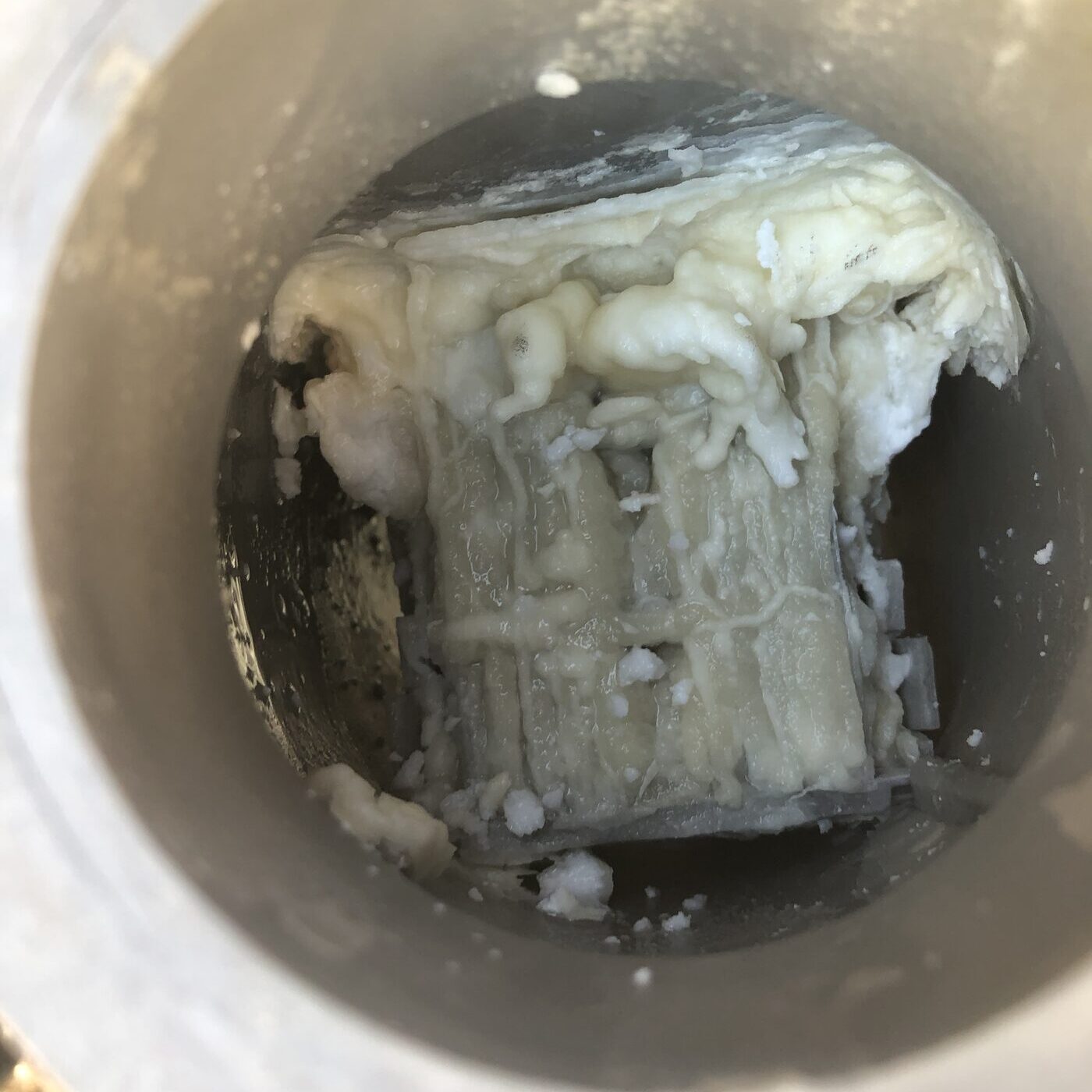
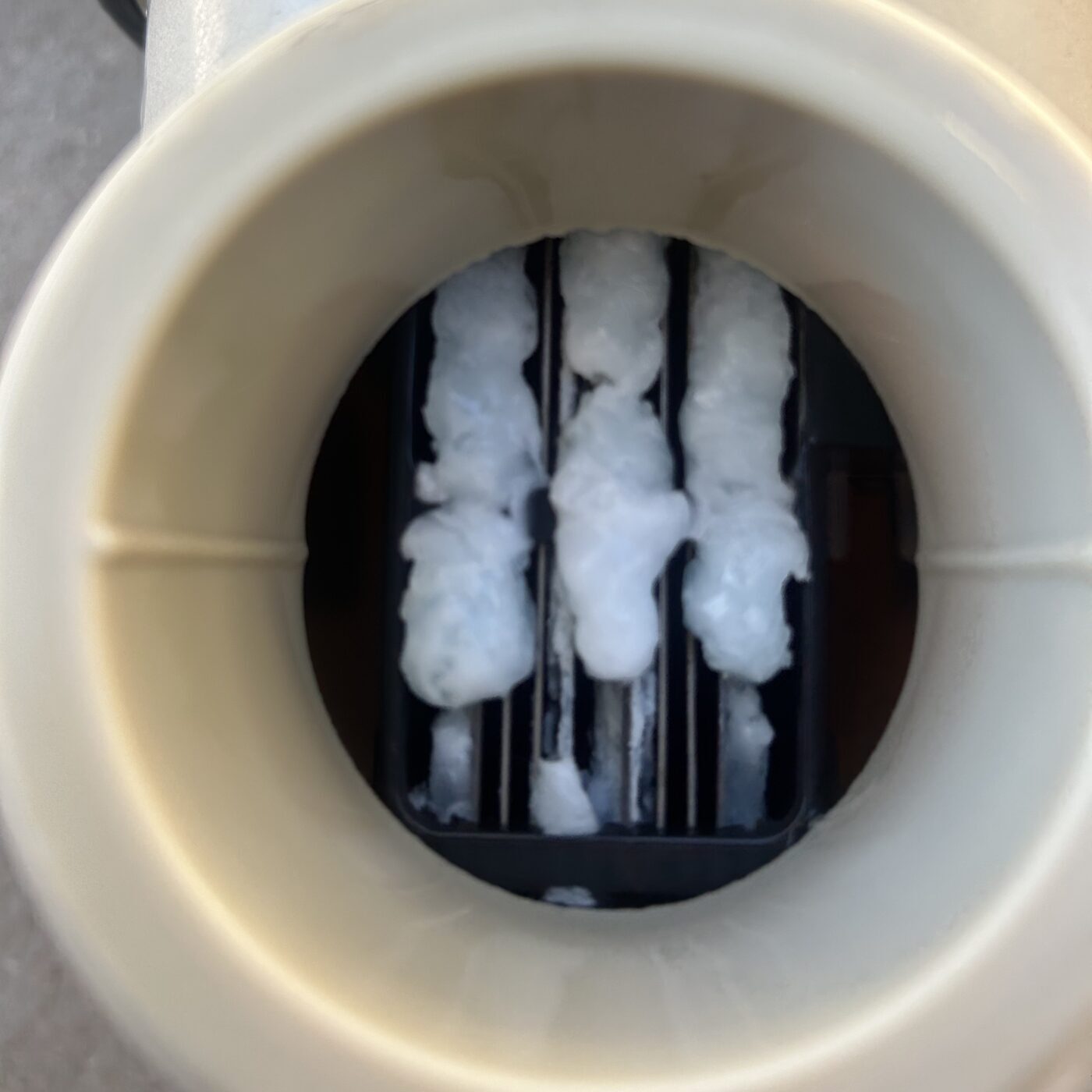
Your salt cell. Salt cells scale up readily, and a scaled cell stops producing chlorine properly. Sixty to seventy percent of "my salt system isn't working" calls are a scaled cell rather than a failed one — which is a much better outcome, but you only find that out by looking. Most times a simple clean can fix the issue. If the building scale is left long enough, it will kill the cell.
Plaster and pebble surfaces. Scale makes them rough. Rough surfaces are unpleasant underfoot, and they hold algae far better than smooth ones, so a scale problem quietly becomes a sanitation problem.
Water clarity. Persistently cloudy water that won't clear despite good chlorine and a clean filter is sometimes calcium coming out of solution rather than anything organic.
How do I know if I have it?
Four things to look for, easiest first:
- Run a thumbnail along the tile at the waterline. Smooth is fine. Gritty or crusty is scale.
- Look at the plaster where the water line sits, and at the steps. Roughness that wasn't there last year is a signal.
- Open the salt cell and look at the plates. White build-up between them is scale. A cell that needs cleaning more than once every one to two months is itself a sign of high calcium.
- Get calcium hardness tested. Not a strip that tests chlorine and pH — hardness specifically. Most people have never had it measured, which is why the first they hear of it is the tile.
If the heater has been getting slower to bring the pool up to temperature, treat that as a symptom worth investigating rather than an annoyance to live with.
The number I act on is 750 ppm. When calcium hardness reaches it, I report it to the customer. The next question is usually how long they can wait before draining, so I give them signs to watch for: cloudy water, low chlorine, and hard-feeling water. At that point — or when the water reaches 1,000 ppm — I'd recommend draining. If the cyanuric acid is high too, I'll also recommend a light acid wash to fully remove minerals and CYA from the walls.
Can I get rid of calcium once it's in the water?
Here's the honest answer, and it's the thing most people don't want to hear: no chemical removes calcium from pool water. There's no bottle or device for it.
What you can do is:
Dilute it. Replacing some portion of the water with fresh water lowers the concentration. It's the only real way to bring a high hardness number down, and it's why partial drain-and-refill is a normal part of owning a pool here rather than a sign something went wrong.
Stop it depositing. Calcium that's dissolved and staying dissolved isn't hurting anything. Keep pH and alkalinity properly in range — high pH is what tips calcium out of solution — and you can run a fairly hard pool for a long time without scale forming.
Use a sequestrant. These hold minerals in solution so they're less likely to deposit. They're genuinely useful, but they are not a cure — they buy time, and they need re-dosing because they break down.
Keep the salt cell clean. Scale on the plates is removable, and doing it before the cell is badly fouled is far cheaper than replacing it.
What you should be sceptical of is anything sold as making hard water not hard. The mineral is in the water. It goes down when you replace water, and no other way.
Retailers sell radio-frequency (RF) water descalers that some might mistake for being able to reduce calcium. What they actually do is help reduce the visual effects for a season. The calcium levels in the water will still climb, and will eventually build up with a vengeance.
Isn't a drain-and-refill risky in Arizona?
It needs doing properly, yes. Plaster that dries out in this sun can be damaged, and an empty shell has its own considerations — which is why draining isn't something to do casually or to leave sitting open. It's routine work, but it's routine work with a right way and a wrong way, and the wrong way costs more than the problem did.
It's also not always necessary. A partial replacement often brings the number down enough, and that's a much smaller job. Which one your pool needs depends on how high the hardness has actually got — which is the argument for measuring it before deciding anything.
Where scale has already deposited on surfaces, that's a separate problem from the water chemistry, and getting the water right won't remove existing deposits. It stops them getting worse.
What's the cost-effective version of this?
Watch three numbers, one surface, and who you have looking at them.
- Calcium hardness, so you know where you are and can see it trending.
- pH, kept in range, because high pH is what makes dissolved calcium become deposited calcium.
- Alkalinity, which is what stops pH wandering in the first place.
- The tile at the waterline, checked by hand or visually every so often.
- A pool service that handles water chemistry holistically and understands the importance of balanced chemicals. That's the part that saves money in the long run.
That's it. Pools that get expensive calcium problems are almost never the ones being tested regularly — they're the ones where nobody looked at hardness for four years and then the heater stopped working. Testing is most of what weekly service is actually for; the visible cleaning is the part you notice, and the chemistry is the part that saves you money.
If your salt cell or heater is already showing symptoms, that's repairs and equipment territory, and a scaled cell caught early is one of the cheaper problems to have.
Not sure whether what you're looking at is scale? Wherever you are in Gilbert or the East Valley, send us a photo and we'll tell you straight.
Drafted with editorial support, then edited, corrected, and signed off by Josiah Linaman from his own experience on East Valley pools. Anything specific to a real job — the numbers, the photos, the opinions — is his.